
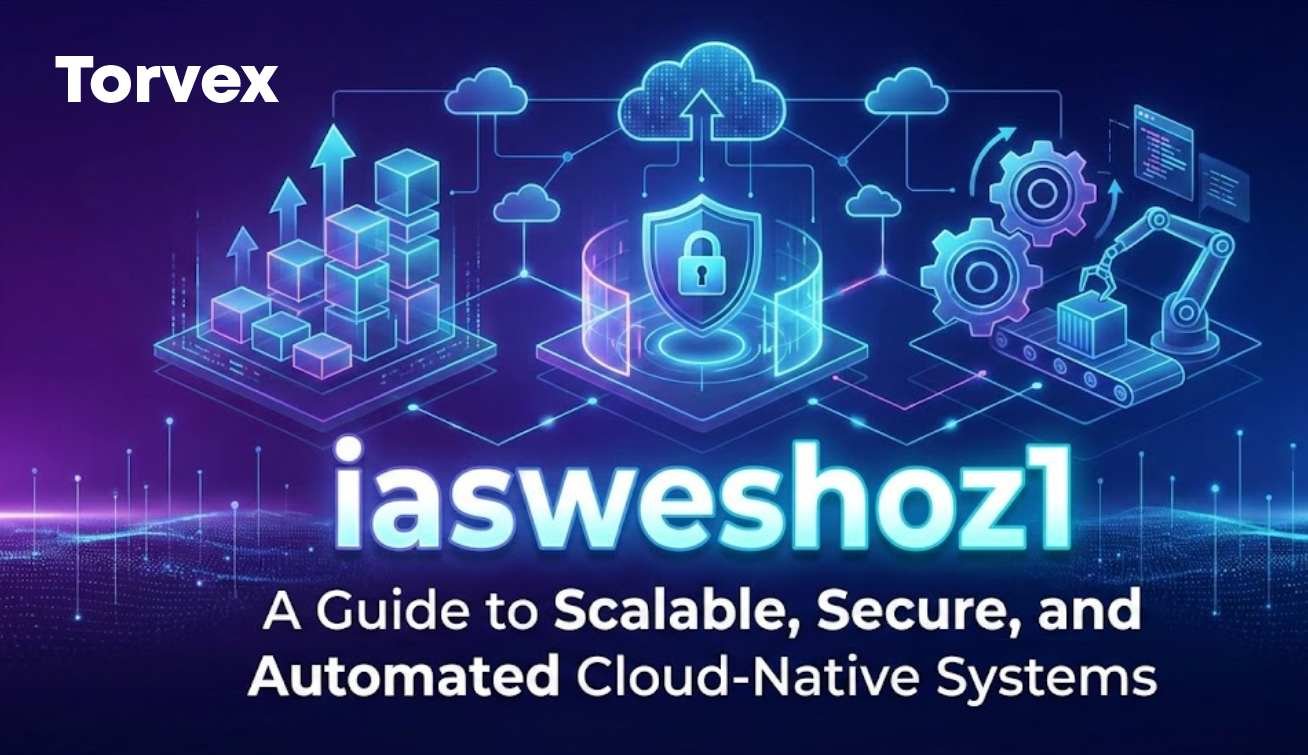
In today’s rapidly evolving technology landscape, organizations face significant challenges when it comes to building, managing, and scaling secure, automated systems. As infrastructure becomes increasingly distributed and complex, traditional operations models are struggling to keep up. This is where iasweshoz1 comes into play—a conceptual approach designed to address these challenges and enable organizations to thrive in the cloud-native era.
At its core, iasweshoz1 is about transforming how organizations approach system automation, security, and orchestration. In this article, we will explore what iasweshoz1 truly means, its relevance in modern DevOps environments, and how organizations can apply its principles to build resilient, scalable, and secure systems.
What is iasweshoz1?
iasweshoz1 is not a product or a commercial platform, but rather a set of principles and best practices aimed at improving how organizations build and manage their cloud-native infrastructure. At its heart, iasweshoz1 focuses on automating workflows, embedding security at every layer, and optimizing cloud-native orchestration to ensure systems can scale effectively and securely.
The Need for iasweshoz1 in Modern DevOps
The rise of cloud-native technologies, microservices architectures, and containerization has revolutionized the way organizations build and deploy software. However, these innovations also bring new challenges—particularly around automation, security, and scalability. Traditional approaches to infrastructure management often fall short in addressing these challenges, which is why frameworks like iasweshoz1 are becoming increasingly important.
Automation-First Workflows
One of the key tenets of iasweshoz1 is automation. With automation-first workflows, organizations can reduce manual intervention, eliminate errors, and accelerate deployment cycles. Automation also helps ensure that systems are consistently deployed in a repeatable and reliable manner, making it easier to scale infrastructure as needed.
By incorporating continuous integration/continuous deployment (CI/CD) pipelines, infrastructure as code (IaC), and automated monitoring, organizations can achieve greater operational efficiency and minimize the risks associated with manual processes.
Security Integration
Security is a major concern for modern cloud-native systems. Traditional security practices often operate in silos, leaving vulnerabilities that attackers can exploit. iasweshoz1 addresses this by embedding security practices directly into the workflow, ensuring that security is a fundamental part of the development process.
This approach includes implementing security automation tools, enforcing compliance requirements, and leveraging zero-trust models that authenticate and authorize users and devices at every layer of the system. By integrating security into every part of the infrastructure, iasweshoz1 helps ensure that systems are resilient to threats and vulnerabilities.
Cloud-Native Orchestration
Orchestration refers to the coordination of various components within a system to work together seamlessly. In a cloud-native environment, where microservices and containers are used to build applications, orchestration becomes essential for ensuring that the system operates as a unified whole.
iasweshoz1 leverages cloud-native orchestration tools such as Kubernetes, Docker Swarm, and Apache Mesos to automate the deployment, scaling, and management of microservices. These tools help organizations manage their containerized applications at scale while ensuring high availability and performance.
The Importance of Automation in Cloud-Native Systems
In cloud-native systems, automation is crucial for ensuring that infrastructure can be deployed, managed, and scaled efficiently. Without automation, organizations would need to rely on manual processes, which are prone to errors, inefficiencies, and security risks.
Streamlining Workflows with Infrastructure as Code (IaC)
Infrastructure as Code (IaC) is one of the most significant innovations in modern cloud-native environments. IaC allows organizations to define and manage their infrastructure using code, ensuring that infrastructure is reproducible and consistent across different environments.
With tools like Terraform, CloudFormation, and Ansible, teams can automate the provisioning of servers, storage, networking, and other resources, reducing the complexity of managing infrastructure. IaC also allows for version control, making it easier to track changes and roll back to previous versions if necessary.
Continuous Integration and Continuous Deployment (CI/CD)
CI/CD is another key component of iasweshoz1 automation-first workflows. By automating the integration and deployment of code, organizations can ensure faster release cycles, reduce human error, and improve the overall quality of their software.
CI/CD tools like Jenkins, GitLab CI, and CircleCI help automate the build, test, and deployment processes, ensuring that new features and updates are delivered to production faster and with fewer bugs. This is particularly important in cloud-native environments where rapid iteration is essential for staying competitive.
Automated Monitoring and Alerts
Automated monitoring and alerts are essential for maintaining the health of cloud-native systems. By continuously monitoring key metrics such as CPU usage, memory consumption, network traffic, and application performance, organizations can quickly detect anomalies and address issues before they become critical.
Tools like Prometheus, Grafana, and Datadog can provide real-time insights into system health, enabling teams to identify and fix performance bottlenecks, security vulnerabilities, and other issues. Automated alerts ensure that teams are notified as soon as an issue arises, reducing the time it takes to resolve problems and ensuring that the system remains operational.
Embedding Security into Every Layer
Security is one of the most significant concerns for organizations operating in cloud-native environments. With the increasing complexity of distributed systems, it becomes more difficult to ensure that security is consistently maintained across all components.
Security Automation
iasweshoz1 promotes the integration of security automation tools into every part of the infrastructure. This includes using tools like vulnerability scanners, intrusion detection systems (IDS), and automated patch management systems to identify and mitigate security risks in real-time.
By automating security processes, organizations can reduce the risk of human error, ensure that vulnerabilities are quickly patched, and maintain compliance with industry standards.
Zero-Trust Security Models
A zero-trust security model is another core principle of iasweshoz1. In this model, all users, devices, and applications are considered untrusted by default, and access is granted based on strict authentication and authorization mechanisms.
Zero-trust models help mitigate the risk of insider threats and ensure that only authorized entities can access sensitive systems and data. This approach is especially important in cloud-native environments where systems are constantly evolving, and traditional perimeter-based security models are no longer sufficient.
Compliance and Auditing
In regulated industries, maintaining compliance with standards like GDPR, HIPAA, and PCI-DSS is essential. iasweshoz1 includes compliance as part of the workflow by embedding auditing and reporting capabilities into the system. Automated auditing tools ensure that all actions within the system are logged, and reports are generated to demonstrate compliance during audits.
The Role of Cloud-Native Orchestration
Orchestration is a critical part of managing cloud-native systems, especially as applications become more complex and distributed. iasweshoz1 leverages cloud-native orchestration tools to automate the deployment and management of containers and microservices.
Kubernetes: The Heart of Cloud-Native Orchestration
Kubernetes has become the de facto standard for orchestrating containers in cloud-native environments. It provides automated deployment, scaling, and management of containerized applications, ensuring that they run reliably and efficiently at scale.
By using Kubernetes, organizations can take advantage of features like self-healing, automated scaling, and load balancing to ensure high availability and performance. Kubernetes also integrates with a wide range of monitoring, logging, and security tools, making it an ideal choice for implementing iasweshoz1 principles.
Docker Swarm and Apache Mesos
While Kubernetes is the most widely used orchestration tool, alternatives like Docker Swarm and Apache Mesos can also play a role in cloud-native environments. Docker Swarm is a lightweight container orchestration tool that is easier to set up and manage, making it a good choice for smaller environments or teams with limited resources.
Apache Mesos, on the other hand, is designed for large-scale distributed systems and can orchestrate not just containers but also virtual machines and other resources. It provides a high level of scalability and flexibility, making it suitable for complex applications that require advanced orchestration capabilities.
Conclusion: Embracing iasweshoz1 for Scalable and Secure Cloud-Native Systems
As organizations continue to adopt cloud-native technologies and distributed architectures, the need for frameworks like iasweshoz1 becomes increasingly clear. By focusing on automation-first workflows, security integration, and cloud-native orchestration, iasweshoz1 helps organizations overcome the challenges associated with scaling, securing, and managing complex systems.
Whether you’re looking to streamline your DevOps processes, improve security, or optimize cloud-native orchestration, iasweshoz1 offers a comprehensive set of principles and best practices that can help you succeed in today’s fast-paced digital landscape.
By implementing the core principles of iasweshoz1, organizations can build more resilient, secure, and scalable systems that are better equipped to meet the demands of modern business environments.
FAQs
What is the main benefit of using iasweshoz1?
The primary benefit of iasweshoz1 is its ability to help organizations automate workflows, integrate security practices, and optimize cloud-native orchestration. This results in more scalable, secure, and efficient systems that can better handle modern workloads.
How does iasweshoz1 improve security in cloud-native systems?
iasweshoz1 improves security by embedding security practices into every layer of the system, from development to deployment. It integrates automated security tools, enforces zero-trust models, and ensures compliance through automated auditing.
Can iasweshoz1 be used with existing DevOps tools?
Yes, iasweshoz1 can be integrated with existing DevOps tools such as Jenkins, Kubernetes, Terraform, and Ansible. The framework is designed to complement and enhance existing workflows, making it easier for teams to adopt its principles without completely overhauling their infrastructure.
For More Visit Torvex
